

Sauna and cold plunge together is called contrast therapy, and it works by swinging your blood vessels open with heat, then clamping them shut with cold. The standard protocol: 15 to 20 minutes of sauna, 2 to 4 minutes of cold plunge, rest, repeat 2 to 3 rounds, ending on cold. You can pay $40 a session at a spa, or do it at home. Here's how it works and how to set it up.
If you've been searching "sauna cold plunge near me," you've probably found that drop-in contrast therapy runs around $40 a session at recovery studios and spas. That adds up fast for something you'd want to do a few times a week. The good news: contrast therapy isn't complicated, and a single Cold+Hot tub can do both ends of it at home.
Here's what hot-and-cold therapy actually does, the protocol that works, and how to stop paying per visit.

What does sauna and cold plunge do together?
Pairing sauna and cold plunge pumps your circulation by alternating two opposite responses. Heat dilates your blood vessels and raises your heart rate. Cold constricts them. Cycling between the two acts like a pump for your circulation, flushing metabolic waste out of tired muscles and bringing fresh, oxygen-rich blood back in.
The cold half drives the recovery and mood effects on its own. Cleveland Clinic ties cold immersion to reduced inflammation through vasoconstriction, and Mayo Clinic Press links it to less exercise-induced muscle damage. Add the heat exposure of a sauna, which a long-term Finnish study following men for around 20 years associated with lower all-cause mortality among frequent users, and you get a recovery routine that hits both ends.
The benefits of contrast therapy
The combination targets recovery, circulation, and stress resilience at once. The alternating vessel response reduces muscle soreness and speeds recovery between training sessions. The circulation boost helps clear inflammation. And the back-and-forth trains your nervous system to stay calm through discomfort, which carries over into how you handle everyday stress.
There's a mood payoff too. The cold triggers a large, lasting release of norepinephrine and dopamine, so the focus and good mood can stick around for hours after you finish. Most people end a contrast session feeling alert and oddly settled at the same time.
The right order: sauna first, then cold
Go hot first, then cold, and end on cold. That's the traditional Nordic sequence and the most studied one. Finishing on the cold plunge leaves your nervous system alert and helps tamp down residual inflammation rather than leaving you flushed and sleepy.
A simple protocol looks like this: 15 to 20 minutes in the sauna at 150°F to 185°F, then 2 to 4 minutes in a cold plunge at 50°F to 59°F, then about 10 minutes of passive rest. Repeat for 2 to 3 rounds. Hydrate well before you start, since the sauna will make you sweat, and ease into shorter times if you're new.
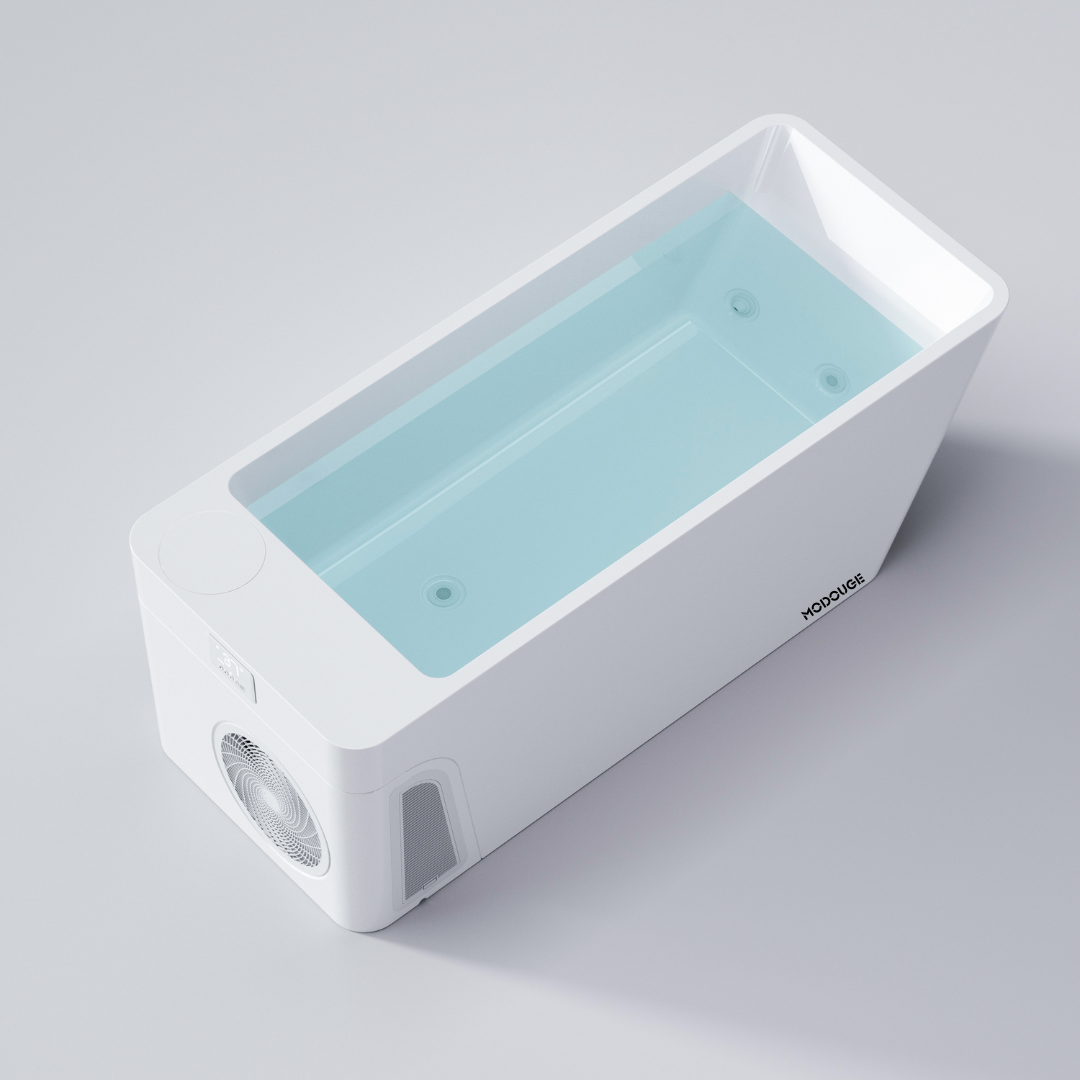
How to do sauna and cold plunge at home
You don't need a spa membership or two separate machines. A Cold+Hot tub handles both the heat and the cold side of contrast therapy in one unit, so you can run the full protocol at home whenever you want.
The Modouge Cold+Hot Cold Plunge ranges from 35°F all the way up to 107°F, so you warm up and cool down in the same tub. It holds your set temperature with a 1HP chiller, keeps the water clean with ozone filtration, and switches modes from the app. Pair it with any home sauna for the classic hot-then-cold routine, or use the hot mode alone as your warm phase. Either way, the per-session spa fees stop.
Who should be careful
Contrast therapy swings your heart rate and blood pressure hard in both directions, so it asks more of your cardiovascular system than either heat or cold alone. The American Heart Association cautions that cold immersion strains the heart, and heat adds its own load.
If you have heart disease, high blood pressure, or diabetes, talk to your doctor before starting. Never submerge your head in the cold plunge, ease into the durations, and skip the routine if you feel lightheaded at any point.
The bottom line
Sauna and cold plunge together pump your circulation, speed recovery, and build stress resilience. Go hot first, cold second, end on cold, and repeat for a couple of rounds.
Skip the search for a studio nearby and do it at home with the Modouge Cold+Hot tub, which covers both temperatures in one unit. New to the cold side? Start with why a cold tub is good for you.
FAQ
Should you sauna or cold plunge first?
Sauna first, then cold plunge, ending on cold. This is the traditional Nordic sequence and the most studied. Finishing cold leaves you alert and helps reduce residual inflammation.
How long should you spend in each?
About 15 to 20 minutes in the sauna, then 2 to 4 minutes in the cold plunge, followed by roughly 10 minutes of rest. Repeat for 2 to 3 rounds, and shorten the times if you're just starting.
Can I do contrast therapy at home?
Yes. A Cold+Hot tub like the Modouge unit handles both temperatures, from 35°F to 107°F, so you can run the full protocol at home. Pair it with a sauna or use the hot mode as your warm phase.
How often should you do sauna and cold plunge?
Two to three times a week is a good starting point, and you can build to daily if your body handles it well. Consistency matters more than long single sessions.
Is contrast therapy safe for everyone?
Not for everyone. The hot-cold swing strains the cardiovascular system, so anyone with heart disease, high blood pressure, or diabetes should check with a doctor first and ease in gradually.
0 comments